Personal Injury and Clinical Negligence Newsletter: The ADR Edition (Spring 2026)

Introduction
Welcome to the Spring 2026 edition of Gatehouse’s Personal Injury and Clinical Negligence Newsletter – the special Alternative Dispute Resolution Issue.
In this ADR issue, we are very lucky to have key contributions from our brilliant silks, Charles Bagot KC and Emma Zeb KC. Emma Zeb KC explores the pros and cons of mediation in Personal Injury and Clinical Negligence, including cost and proportionality benefits, power imbalances, strategic misuse, and more.
Charles Bagot KC, and Janine Clark, Partner at Clyde & Co in Brisbane, have produced an insightful podcast “ADR in Personal Injury claims: a comparison between the approach in England and Wales and Queensland, Australia”. This in-depth recording considers a plethora of issues, including comparative approaches to compulsory mediation, psychological drivers behind settlement, as well as how AI might change the ADR landscape. We also have an excellent feature from Colm Nugent on Part 36 offers where the prognosis is unclear, an insightful article from Jasmine Murphy on Early Neutral Evaluation, and a topical piece by Emma Woods on Fixed Costs and Part 36.
It has been great catching up with some of our clients, recently in Cardiff – as well as in Manchester and London. We also managed to catch-up with Jake Rowley, who shares his insights on ADR in this newsletter.
Editor – Charlotte Wilk
News
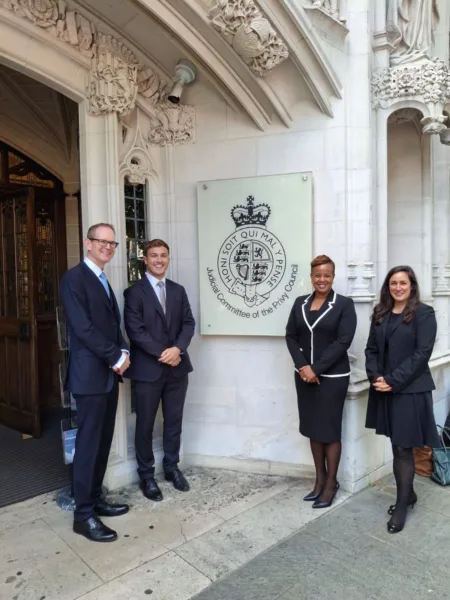
Charles Bagot KC and Sara Ibrahim successful in Privy Council Appeal
On 9 February 2026, the Judicial Committee of the Privy Council handed down its judgment in Tyson Strachan (Appellant) v Albany Resort Operators Ltd (Respondent) (The Bahamas)[2026] UKPC 5. Charles Bagot KC, leading colleague Sara Ibrahim, along with their instructing solicitor Attorney from Glinton Sweeting O’Brien in the Bahamas, Giahna Soles-Hunt, appeared for the Respondent. They successfully secured the dismissal of the appeal on all grounds. Henry Hickman at Sinclair Gibson LLP completed the legal team as London Agent. This was a mixed personal injury and employment claim – further details can be found below.
Helena Drage returns from maternity leave
The team is delighted to welcome Helena Drage back following maternity leave. She returns to a busy practice consisting of inquests, public inquiries, and medical law.
What have we been up to?
Here are some highlights from the past few months.
- Has just received the Privy Council’s judgment in the appeal he argued, leading chambers colleague Sara Ibrahim and their Instructing Attorney Giahna Soles-Hunt of GSO Legal in the Bahamas. They were successfully secured the dismissal of the appeal on all grounds in Tyson Strachan (Appellant) v Albany Resort Operators Ltd (Respondent) (The Bahamas) [2026] UKPC 5
The judgment is interesting as it is an unusual analysis at Privy Council level of:
- the necessary ingredients legally and evidentially for a viable tort claim for damages;
- the pleading and particularisation requirements for a viable employment claim; as well as
- the appropriate procedure and threshold associated with a submission of no case to answer in a civil claim.
- Has attended a range of outreach events, encouraging, advising and supporting the next generation of aspiring Barristers (and Solicitors) into the professions, including two events in Bristol attended by individuals from across the South West (and well beyond), at the University of Westminster and at Inner Temple in London.
- Has been advising in various offshore personal injury and clinical negligence claims, including a birth injury claim and a serious road accident.
- Has settled a very long-running high value clinical negligence claim for the NHS, where novel issues around genetic testing and its interplay with causation in birth and neonatal injury claims arose.
- Has been advising and representing clients, both Claimants and Defendants, in a range of spinal and brain injury cases.
- Attending Nottingham Inquiry and continuing to work on this case for one of the Core Participants.
- Work on evidence for the Manston Inquiry on behalf of a current Material Provider.
- Dealing with advisory and drafting work in relation to two Judicial Review matters (one for a Coroner and one for another interested party).
- Instructed by Children’s Services in respect of an inquest concerning the murder of a toddler at the hands of family members.
- Instructed by Adult Social Care in respect of the death of an elderly lady with dementia where there are allegations around the care she received within her home, including issues of domestic abuse.
- Periods of sitting in both the Crown and County Court.
“Colm Nugent has selected the following as representative of the work he has been involved with over the last few weeks:
- Site visit with Occupational Therapist, Case Manager and Rehabilitation Specialist at new property built for semi-quadriplegic client. Colm negotiated a £1.6, interim payment to purchase and reconfigure the property. The client moves in next month.
- Successful settlement of a clinical negligence claim, in which the claimant’s cosmetic facial surgery left her with long-term facial pain.
- Successful outcome in a professional negligence dispute following a JSM. Claimant’s claim was under-settled by his PI solicitors. Colm was instructed to pursue the true value of the claim.
- Instructed in contractual dispute between NHS supplier and former contractor, over alleged unpaid commissions following a successful NHS tender process.
- Instructed in new (potential) professional negligence claim to pursue a s.33 Application to disapply primary limitation, in circumstances where the previous solicitor failed to serve the claim form in time.
- Prepared the final schedule for issue in a quadriplegic RTA claim. The schedule current exceeds £8m.
- Alongside her personal injury practice, Jasmine Murphy has recently been defending some solicitor and barrister professional negligence claims arising out of personal injury claims gone wrong.
- Such cases often involve an in-depth knowledge of personal injury law and how it would have been applied in the past. This is necessary to calculate what the value of a lost claim would be as well as gauging the level of the lost chance.
- Has been involved in defending solicitor professional negligence actions since the days of group litigation with The Accident Group and subsequent “Son of TAG” litigation.
- Settling a case for a delay in diagnosis of cancer for £1.3m on behalf of the Claimant, with a substantial provision for accommodation notwithstanding a very short life expectancy.
- Resisting the bulk of the Defendant’s High Court application for relief from sanctions arising from the late service of clinicians’ witness statements.
- Representing the family in an ongoing inquest where there are concerns over a delayed response to post-operative complications.
- Delivering the legal update to the Liverpool Law Society annual clinical negligence conference.
- Drafting the Defence in a Multi-Track PI claim concerning a Doctor who was providing medical and associated services to former prisoners and drug addicts in a community setting, and alleges she was assaulted by one of the service users.
- Settling an interesting PI claim where Jake’s client was stung in the ear canal by a Spanish hornet causing a very florid and unexpected inflammatory reaction. It was later discovered that Jake’s client had pre-existing but previously undiagnosed skin cancer in the ear. The case gave rise to complex questions of causation.
- Drafting a Counter Schedule of Loss on behalf of Cayman Island attorneys in a Cayman case where the Plaintiff alleges to have sustained a brain injury and a chronic pain condition following a road traffic accident.
- Appearing at trials and interim applications in an array of Fast and Multi Track personal injury matters.
- Appearing in the Senior Courts Costs Office in matters concerning:
- An application for a deduction from a child’s damages to cover a shortfall in solicitor/client costs; and
- An application to set aside a Default Costs Certificate on both mandatory and discretionary grounds.
- Recording a two part talk (with Colm Nugent and Emma Woods) on “Fundamental Dishonesty – What you need to know” with LexisNexis (https://www.lexisnexis.com/university/course.aspx?classInfo=Crs%7E2036%7E70020);
- Recording a webinar on “CCC v Sheffield NHS – Lost Years & Child Claimants Explained” with MBL Seminars (https://www.mblseminars.com/courses/ccc-v-sheffield-nhs-lost-years-and-child-claimants-explained-webinar).
- Helena has been busy working on the Independent Inquiry Relating to Afghanistan for the MOD Corporate team.
- Helena is regularly instructed in complex and sensitive inquests involving institutional failings and deaths in custody and care. On the clinical negligence side, Helena has particular expertise in catastrophic orthopaedic and traumatic brain injuries.
- Advising the Defendant on a claim brought by a mother arising out of the death of her young baby, including on the primary victim, secondary victim and Human Rights Act claims;
- Assisting Charles Bagot KC with advising the Defendant on a claim brought by a father as a secondary victim, arising out of the death of his baby;
- Advising the Defendant and amending a Defence in respect of a claim arising out of alleged failures concerning an ankle fracture, including issues around whether there was a non-delegable duty of care;
- Recording a ‘Clinical Negligence Update’ with LexisNexis.
- Has recently been instructed by the Russian Federation (the Paying Party) in a 4-day detailed assessment of the Receiving Parties’ costs in the landmark case of Hulley v Russia [2025] EWCA Civ 108 – an appeal in the Court of Appeal concerning the issue as to whether the principle of issue estoppel applies to the determination by an English Court whether one of the exceptions to state immunity set out in sections 2 to 11 SIA 1978 applies. Charlotte appeared as sole counsel against a silk; she reduced the Bill of Costs by c.70% (a saving of approximately £668,000), securing a rare order that the Receiving Parties pay her client’s costs of assessment.
- Recently acted for a successful local authority at a fast-track Highways Act trial – where the judge found that the relevant alleged uneven paving slab was not dangerous (nor raised, as alleged).
- Continues to advise on several dental negligence matters, one of which involves a tricky limitation point.
- Has also been advising on several cases involving injuries sustained in prison, and cases involving security guards. She also continues to advise in a number of cycling matters.
- Acting for two defendants in similar PI matters, both of which involve an allegation that a delivery driver has injured the recipient of a delivery.
- Has attended several outreach events, encouraging students to consider a career at the Bar (including giving a talk at Lincoln’s Inn).
- Acting (led by Emma Zeb KC) for a core participant in the Nottingham Inquiry;
- Appearing in a number of PI Fast Track and Small Claim trials involving personal injury, including a trial involving a claim against a driver in negligence for the actions of their third-party passenger in opening their door into the path of the claimant cyclist;
- Drafting Particulars of Claim, Defences, and Advices for a variety of personal injury matters involving accidents;
- Attending the Personal Injury Bar Association annual residential conference in Oxford.
ADR in Personal Injury claims: a comparison between the approach in England and Wales and Queensland, Australia
Charles Bagot KC and Janine Clark, Partner at Clyde & Co in Brisbane, present a special podcast:
ADR in Personal Injury claims: a comparison between the approach in England and Wales and Queensland, Australia.
So, grab your coffee (or two) and sit back for this comprehensive comparative podcast on ADR.

Mediation in Personal Injury and Clinical Negligence: The pros and cons
Mediation is in theory supposed to have moved from the periphery of personal injury and clinical negligence litigation to something approaching the mainstream. In some ways we have seen this and of course court directions now require this. For solicitors advising clients in an increasingly cost-sensitive and court-directed environment, the question is no longer whether mediation should be considered, but rather when it genuinely adds value – and when it does not.
From the Bar’s perspective, mediation can be an extremely effective tool in the right case. It can also, if misused or mistimed, be an expensive distraction. What follows is a candid assessment, only mine of course, of the positives and negatives of mediation, aimed at those making the strategic call on whether to recommend it to clients.
Article by Emma Zeb KC

Part 36 offers when the prognosis is unclear
This article considers the impact of IEH v Powell [2023] which remains unchallenged in the higher courts.
As we know, for QOCS cases issued before 6 April 2023, rule 44.14 allows a Defendant to enforce a costs order made in its favour case against an order for damages and interest made in favour of a Claimant.
Cases issued after 6th April 2023 (and for those who have a PI claim that arose on or before 5th April 2023, time is running out!) have been subject to the new rule. This allows a Defendant in a QOCS case to enforce a costs order in its favour against a Claimant’s order or settlement for damages, interest and costs.
Where a Defendant makes a Part 36 offer and it is accepted after the 21 day ‘relevant period’, rule 36.13(5) provides that the Claimant will recover costs to the end of the relevant period and the Defendant will recover its costs from the end of the relevant period to the date of acceptance. However, if the court considers that it would be unjust to apply this rule, it will not do so.
Following the rule change, Claimants receiving a Part 36 offer will have in mind the risk that late acceptance of that offer might now go beyond not recovering their costs from the end of the relevant period. They might also face a Defendant being able to enforce its costs order against the Claimant’s damages, interest and costs obtained in that settlement.
What happens in a clinical negligence or personal injury case where a Defendant makes a Part 36 offer at a stage when the Claimant’s prognosis is still uncertain? If a Claimant waits until the picture becomes clear and then accepts the offer late, will the Defendant be able to recover its costs or will the court consider that to be unjust in the circumstances?
Article by Colm Nugent

Early Neutral Evaluation – the ADR Unicorn?
As injury lawyers, our regular ADR diet consists of Joint Settlement Meetings or Mediations, not so much Early Neutral Evaluation (ENE). It seems like the mythical unicorn of ADR – oft spoken of but rarely seen in practice. When I was speaking about ENE to a large group of insurers at a recent seminar, a straw poll indicated that ENE was not being considered at all. Should we be making better use of ENE?
Article by Jasmine Murphy

Attersley v UK Insurance Limited [2026] EWCA Civ 217: fixed costs and Part 36
The Claimant was involved in a road traffic accident on 9 March 2018. On 19 March 2018, the Claimant’s solicitors submitted a CNF under the Pre-action Protocol for Low Value Personal Injury Claims in Road Traffic Accidents (“the RTA Protocol”), which stated the value of the claim was up to £10,000. On 9 April 2018, the claim exited the RTA Protocol. The Defendant later admitted liability.
On 13 February 2021, the Claimant issued a Part 7 claim form, with the Particulars of Claim stating she expected to recover up to £150,000 in damages. On 4 March 2021, the Defendant filed a Defence admitting liability and made a Part 36 offer of £45,000.
On 5 January 2022, at a CMC, the parties agreed that the case was suitable for the multi-track.
On 18 May 2022, the Defendant applied to amend its Defence to allege fundamental dishonesty. The application was never heard as on 8 July 2022, the Claimant accepted the Defendant’s Part 36 offer. A hearing was fixed to determine the consequences of the Claimant’s acceptance of the offer. The parties agreed that if the Claimant had accepted the offer within the relevant period, she would have been limited to fixed costs.
At first instance, HHJ Duddridge found for the Defendant. On appeal, Stacey J found for the Claimant.
Article by Emma Woods

'2 minutes with'… Jake Rowley
Would you support compulsory mediation in all PI litigation?
The direction of travel over the past few years has clearly been towards greater use of ADR, including mediation. There are very good reasons for that not least potentially huge savings in terms of time and expense in resolving the case. Mediation is, perhaps, an underused form of ADR in PI litigation; in my experience parties still often see Joint Settlement Meetings as the preferred or ‘go to’ option. Mediation can have fantastic results; a good mediator can unlock settlements between even the seemingly most intransigent and unwilling parties and can obviously achieve more flexible outcomes that a Court would simply not be able to provide. I would certainly be in favour of a greater use of mediation but I would not support compulsory mediation in all cases. There are two key reasons for that: (i) I can foresee some cases in which there are particular sensitivities surrounding/inherent in the claim which may not make it suitable – from the client’s perspective – to engage in a process of that sort. Mandating mediation in those circumstances may cause the client further and avoidable stress, anxiety or upset; and (ii) I believe in the inherent right of any litigant to have their dispute resolved by the Court system if that is what they desire; I do not believe access to the Courts should be in some way contingent on first going through an ADR process, which fails (although that is not to say that there should not be a costs risk on that course of action)!
Do you think mediation by Artificial Intelligence will be the norm in 5 years’ time?
The use of AI in legal practice has understandably grown exponentially; many of the tools now available are incredibly useful and extremely powerful, although there clearly remain some challenges and pitfalls to be worked out (by the developers and the profession). Who knows how quickly things will develop in the next 5 years; like many technological advancements the pace of improvement will no doubt increase as time passes. At present, however, I struggle to see that mediation by AI will be the ’norm’ in 5 years’ time; I think that there are many ‘soft skills’ that a mediator brings to bear during the mediation process, as well as the ability to engage with individuals on a human level, which help unlock settlements and which I just do not think AI will be able to replicate. Ask me again in 5 years’ time and we’ll see how right/wrong I am!
Can you tell us a random fact about yourself that not many people know?
I used to be an international sabre fencer and referee! Fencing was a huge part of my life when I was younger; I was lucky enough to fence in the England and Great Britain Under 20 national squads, travelling all over Europe (and sometimes further afield) to compete. I am a former Junior Commonwealth Championship Team Gold medalist, fencing for England. After I stopped competing, I began to referee domestically and internationally: I refereed countless British National Championship finals; the finals of the Junior Commonwealth Championships, Under-20 Junior Internationals (including finals) and Senior World Cups. I still like to keep abreast of what is going on in the fencing world, but from a little farther away now!
What is the best thing about being a barrister?
It’s difficult to pinpoint one thing as being the best thing about being a barrister – there are a lot! If I had to choose, I would say it is the high degree of flexibility inherent in the role which means an ability to develop and control your own practice; work in a manner most suited to your own disposition; and take time off when you need to.
What has been your proudest moment to date in your career?
To date my proudest moment is being successful on appeal in the case of Correia v Williams [2022] EWHC 2824 (KB). The case was the first to expressly grapple with the procedural requirements relating to preparing witness statements for non-English speaking witnesses, and the outcome when those procedural requirements were not followed/met. The issue in the appeal was one which used to crop up regularly in my own practice (and the practices of many of my colleagues at the Bar) so it was nice to be involved in a binding decision which clarified the position.

Contact us
If you would like to discuss any of the topics in this newsletter, please contact the team at steam@gatehouselaw.co.uk or get in touch with one of our Practice Managers below.
To find out more about our Clinical Negligence & Personal Injury Team and their work, visit the Clinical Negligence & Personal Injury page on our website. To view a copy of our privacy statement, please click here.
This edition of the PI & Clinical Negligence newsletter was edited by Charlotte Wilk Comments or queries about this newsletter? Please get in touch with her.
If you are reading this but do not receive our mailings and would like to, please click here.
Natasha Devlin-Clingham
Senior Practice Manager
natasha.devlin@gatehouselaw.co.uk
Tel: +44 (0)20 7691 0004
Mob: +44 (0)7703 728 683
Adam Macdonald
Practice Manager
adam.macdonald@gatehouselaw.co.uk
Tel: +44 (0)20 7691 0114
Mob: +44 (0)7716 079 723
Marc Griffin
Practice Manager
marc.griffin@gatehouselaw.co.uk
Tel: +44 (0)20 7691 0016
Mob: +44 (0)7345 417 340